

TASARIMDAN İMALATA
Mould Steels and Hardness
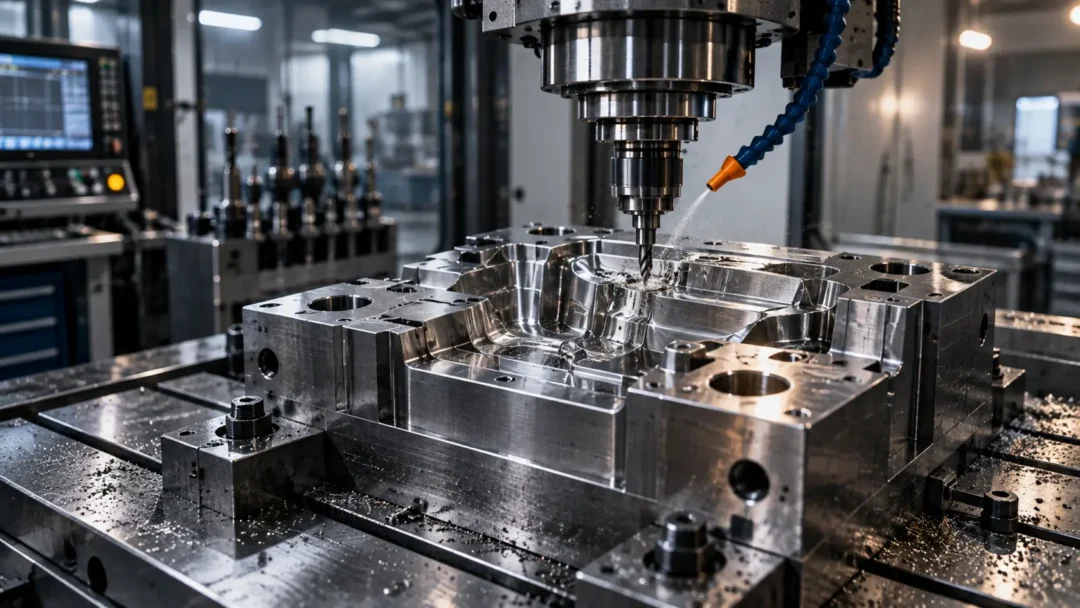
1.2311 / 1.2738: prehardened mould steels. 1.2083: applications requiring corrosion resistance. 1.2344: hot-work applications. Confirm hardness, heat treatment, polishing and wear requirements against supplier data.
Values apply to the named commercial grade and test conditions, not to every material in the family. — means no verified value is provided here. Use the manufacturer's data sheet and material certificate.
| Material / grade | Hardness / condition | Applications |
|---|---|---|
| Impax Supreme — ~1.2738 / P20+Ni | 290–330 HB — Supplied hardness | Large plastic moulds and general cavity/core inserts; specify polishing and texture requirements. |
| BÖHLER 1.2312 / M200 | 280–325 HB — Supplied hardness | Mould plates where machinability matters; assess high-gloss requirements separately. |
| M310 — ~1.2083 ESR / 420 | 48–52 HRC — hardened and tempered | Corrosion-resistant plastic moulds; hardness refers to the heat-treated condition. |
| 1.2344 / H13 | — | Hot-work, die-casting and thermally loaded inserts. |
| 1.2379 / D2 | — | Cutting and wear applications; not a direct substitute for general-purpose plastic mould steel. |
Do not choose mould alloys by hardness alone. Consider conductivity, wear, corrosion, polishability, repair and heat transfer to cooling channels.
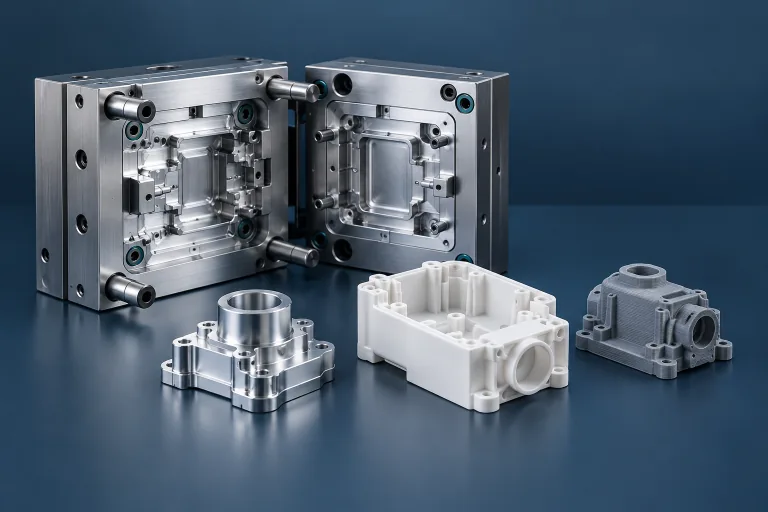
Fixed and moving halves, core, cavity, parting surface and cooling circuits are designed together. Undercuts require slides or lifters; check the movement sequence for interference.