


TASARIMDAN İMALATA
Plastic Shrinkage and Mould Dimensions
Injection-moulding shrinkage must be selected by considering the material grade, part geometry and processing conditions together.
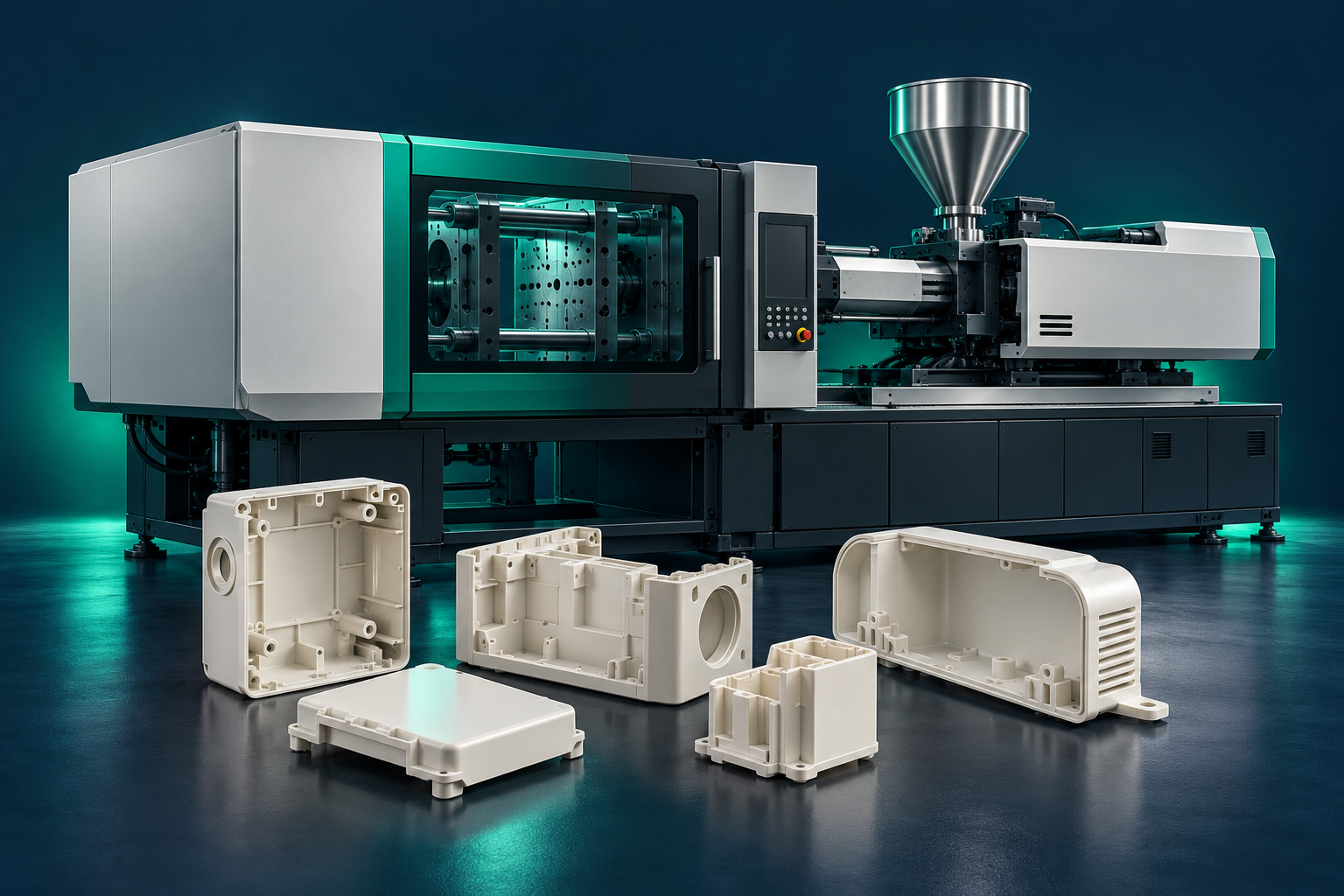
Why one rate is not enough
Different grades of the same polymer do not necessarily shrink equally. Fibre and filler content, wall thickness, gate position, mould temperature and holding pressure affect the result. Glass-filled materials may shrink differently along and across the flow direction.
Linear shrinkage calculation
S is the dimensionless linear shrinkage ratio defined relative to the mould dimension; Lm is the cavity dimension and Lp is the part dimension under the specified measurement conditions. Divide a percentage by 100 before using it in the calculation.
S = (Lm − Lp) / Lm
Lm = Lp / (1 − S)
S = 1 / 100 = 0.01; Lm = 100 / 0.99 ≈ 101.010 mm
Example: assuming 1% shrinkage and a target part dimension of 100 mm gives a mould dimension of approximately 101.010 mm. This example is not a material recommendation.
Practical steps
Use the manufacturer’s data sheet for the exact material code and distinguish flow and transverse values. Specify measurement temperature, elapsed time and moisture conditions. Verify the allowance by measuring initial samples under stable processing conditions. Assess moulding shrinkage separately from subsequent dimensional changes.