


TASARIMDAN İMALATA
What Is Plastic?
An introduction to polymers, thermoplastics, thermosets and the role of additives in manufacturing.
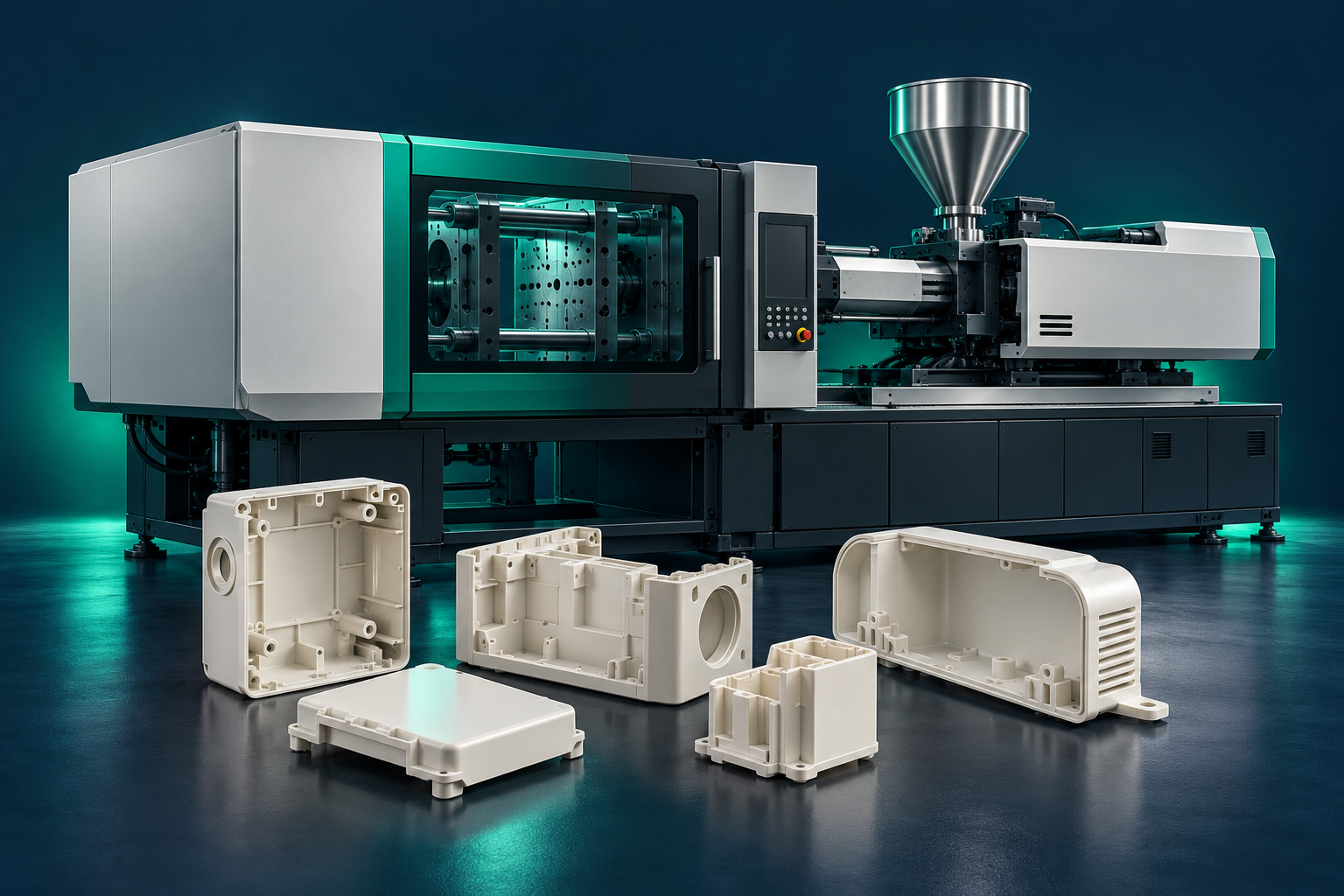
Polymers and plastics
Plastics are materials whose main ingredient is a polymer and which can be shaped during manufacture. Polymers consist of large molecules. A commercial plastic may contain pigments, fillers, reinforcement and stabilizers rather than pure polymer alone. Feedstock can be fossil-based or bio-based.
Thermoplastics
Thermoplastics such as PE, PP, ABS, PA and PC can soften and flow at suitable temperatures, then solidify on cooling. Processes include injection moulding, extrusion and thermoforming. Reprocessing is possible, but thermal history, contamination and degradation affect product quality.
Thermosets
Thermosetting systems such as epoxy and phenolic resins form a network during curing. Once cured, they cannot be melted and remoulded like thermoplastics. Excessive heat may cause decomposition instead of reshaping.
Additives and properties
Plasticizers make certain formulations more flexible; glass fibres and mineral fillers can change mechanical behaviour, shrinkage and dimensional stability. Evaluate compatibility, moisture, temperature, load and service environment together. Plastics do not all have the same density or electrical and chemical resistance.
Brief history
Cellulose-derived materials were among the early plastics. Bakelite, developed by Leo Baekeland in 1907, was a milestone in fully synthetic plastics. Today, selection depends on the specific commercial grade and service conditions, not just the polymer name.
Recycling and selection
Bio-based does not mean biodegradable. Recycling depends on polymer type, additives, sorting, contamination and available processing infrastructure. Use the technical data sheet, processing recommendations and the component's actual operating conditions when selecting a material.