


TASARIMDAN İMALATA
Choosing Between Turning and Milling
Select a machining process according to geometry, material, tolerances, workholding and production quantity.
Define the requirements first
Read the drawing's dimensional, geometric, surface and material requirements. Assess quantity, delivery time, available machines, inspection resources and subsequent heat treatment or coating together. One cycle-time or cost label cannot represent every component.
When is turning suitable?
Turning rotates the workpiece and suits shafts, bushes, discs and rotational surfaces. Plan external and internal diameters, faces, grooves, holes and threads. Long slender parts may need support; assess chuck, jaws, tailstock and tool access. Live-tool capabilities depend on the machine model.
When is milling suitable?
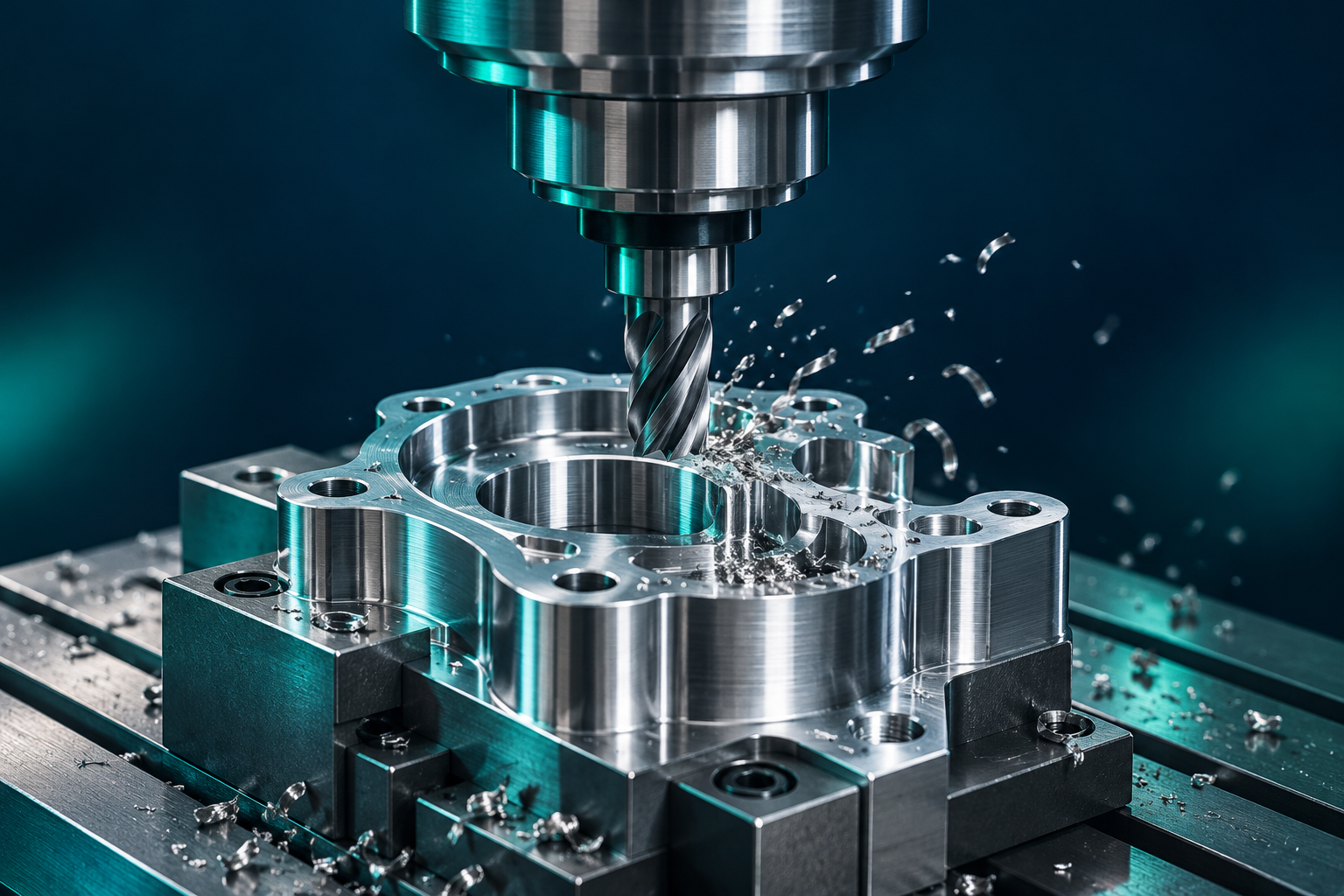
A rotating cutter can machine flat faces, pockets, slots, shoulders and freeform surfaces. Axis configuration and workholding determine accessible surfaces. Consider internal corner radii, depth-to-diameter ratio and holder clearance during design. Not every geometry can be produced in one setup.
Verify capacity and quality
There is no universal diameter, parts-per-hour or roughness limit. Machine travel, power and torque, material, tooling, vibration, temperature and measurement determine the result. Select material-specific tools and cutting data; verify capability through simulation, first-article inspection and process data.
Compare total cost
Include programming, setup, tool changes, inspection, deburring, wear and scrap as well as cutting time. Flexible workholding may suit small batches; validated fixtures and automation may suit series production. Combine turning, milling, grinding or EDM in one manufacturing plan where needed.